by Barry Rubin
Glenn Beck’s program in Israel went off without a hitch, ending in a rally on the southern side of the Old City of Jerusalem. About 1000 people were in attendance, mostly Americans (contrary to the media coverage, a number of the Americans were Jews not Evangelicals) who’d come to Jerusalem at Beck’s urging, but with a sprinkling of Israelis, including a fair proportion of Orthodox Jews.
With the Old City walls to his right and in front of him, and the Al-Aqsa Mosque looming quite close, Beck handled himself with a mixture of audaciousness toward his enemies and sensitivity toward his friends. He announced a global movement, to be headquartered in Texas, to encourage average people to act against injustice, though the details of its scope and goals weren’t clear. Since you won’t get any real coverage in the media, here is the full text of the speech.
While many fulminated against Beck and his Israel project it was hard to find something, he specifically said or did that should provoke such feelings. For example, a presentation on the history of Jerusalem was careful to cite Jewish, Christian, and Muslim connections with the city in a very balanced manner, as the call for prayer wafted from a nearby minaret.
Beck’s mission was to raise support for Israel, and the 1500 viewing parties around the world — including such places as China and Pakistan — guaranteed that many heard the message. He is seeking to reverse the trend in which “sophisticated folk,” my phrase, sympathize with terrorist groups and revolutionary Islamist organizations rather than a democratic state defending itself.
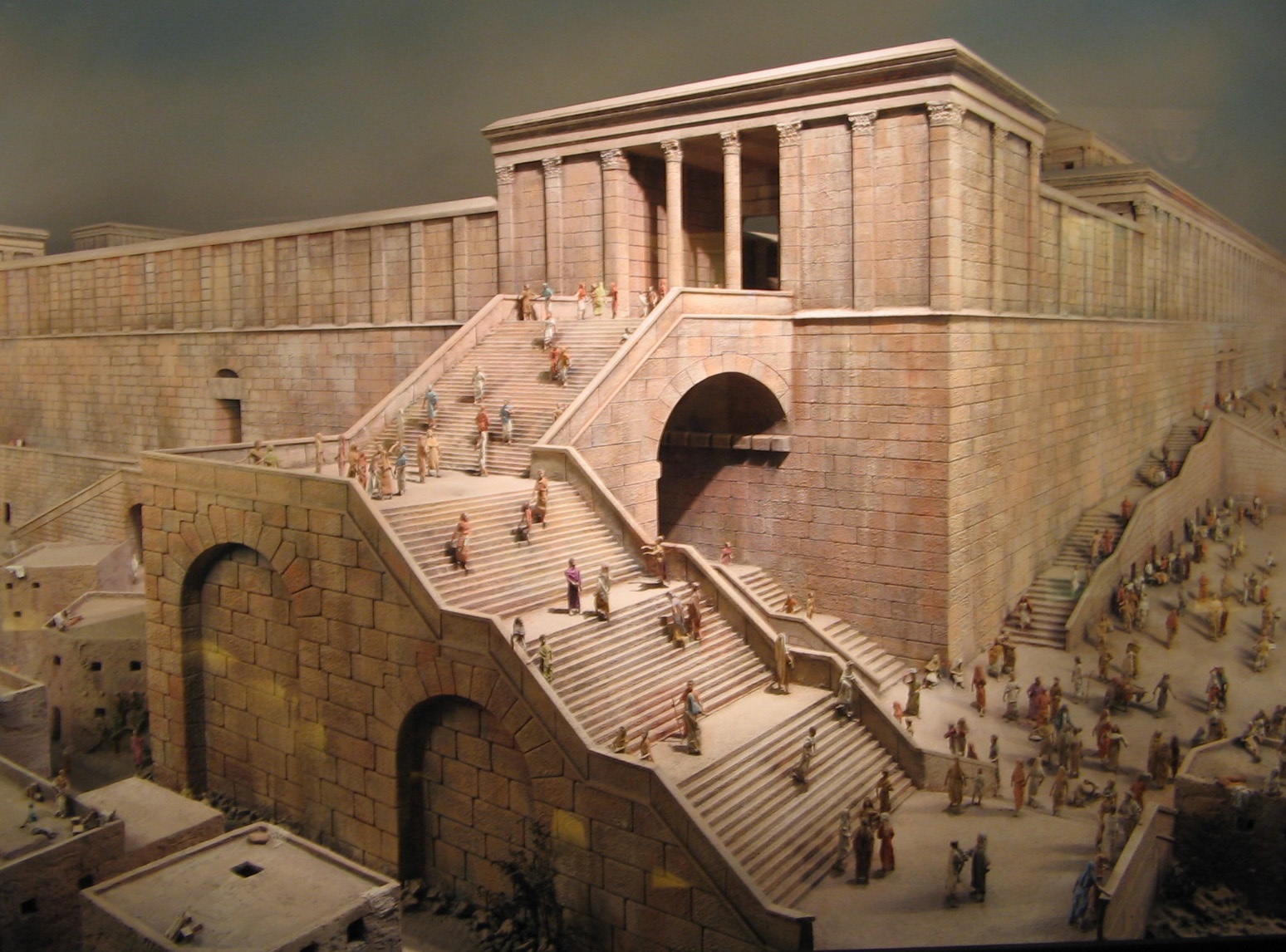
While listening to Beck I realized what a pity it is that so few people who should be doing so analyze him fairly, which doesn’t mean uncritically. He should be seen as a serious and sincere, morally oriented leader who gets some things wrong but is open to dialogue, has admitted mistakes, and has shown a real capacity to learn and grow over time. Only if his ideas are considered fairly can some of them be challenged in an honest way. Instead, we get the kind of baseless hatred (sinat hinam) that is denounced in Jewish tradition. Indeed, that vice is held to be the very reason that the Second Temple, by whose ruins the Beck rally was held, was destroyed.
Here is a hilarious example of the hysterical hatred that many in the media try to whip up against Beck, an AP story that practically draws horns and a tail on Beck. The author is so eager to tell the audience to hate this evil person that any pretense of journalistic fairness is thrown overboard.
The article says that Jews call the place the Temple Mount and the Muslims call it the Noble Sanctuary. Hmm, I wonder what Christians call it? No prizes given. The author also says Beck has engaged in anti-Muslim rhetoric. Really? Can you provide a few examples? Of course not. The article gives a big proportion of space — two of nine paragraphs — to a Peace Now leader who condemns Beck. Everyone in Israel knows that is a dead organization. Another paragraph is devoted to Beck’s position on financier George Soros, trying to make it sound antisemitic.
Not a single quote from anyone favorable to Beck is given. Remember that AP dispatches are supposed to be bland and super-neutral since they are supplied to many different newspapers. This one reads more like a Soviet newspaper under Stalin talking about Trotsky. The article finds no space to report anything that Beck actually said. There is no pretense of fair or accurate reporting because the author knows that editors will let it pass without any professional integrity at all.
So it shouldn’t be any surprise that Beck understands how the media treats Israel.
On one hand, Beck is very much in the Protestant moral revival tradition of America. He could have been a preacher and indeed he is partly that. While often dubbed, as one reporter remarked at the event, “a raving lunatic,” in part, too, Beck is a voice of relative sanity in a society where much of the mass media and universities have come under the control of people who, beyond their elegant phrases and superficially impressive credentials, better deserve that label.
Aside from his view that Christianity cannot exist without Judaism, that the Judeo-Christian heritage is a lynchpin of Western civilization, and that the divine being loves the Jewish people and favors them having a homeland in this land, I think what attracts Beck to the Israel issue is that its demonization so well exemplifies the upside-down craziness of this era. And Beck also knows something about what it’s like to be demonized.
Sitting there in the audience I came to a better understanding of what Beck and his movement is about, not only in regard to Israel but in a broader sense as well. What Beck and the Tea Party most epitomize might be called the post-reactionary conservative and religious right. Such people have accepted many things that their counterparts decades ago fought against. They are anti-racist, more tolerant than their opponents of dissent, and willing to accept equality for women and even equal rights for gays as people (though not necessarily gay marriage).
In contrast to the past authoritarian-oriented right, they believe the power of the state has gone too far. Historically, liberals represented a more liberty-oriented agenda, yet today those who call themselves liberals are statists, supporting more restrictive laws and regulations, stronger central government, higher spending, and bigger debts without end. What makes things especially troublesome is the fact that these laws, spending, and bureaucracy really aren’t doing much good except for those who gain government employment, contracts, or corporate bailouts from the federal budget.
Thus, whatever his silliness — much of which is really comedy or taunting his adversaries — Beck and his supporters, including the Tea Party, are not some new Klu Klux Klan, apologists for big business monopolies, a Nazi party, or whatever. They are a new phenomenon reacting to new and very changed conditions. They are not trying to roll back American society to a pre-civil rights era but to prevent it from entering a statist, anti-patriotic, bankrupt era.
To many readers here, all of this is relatively obvious. Yet roughly half of the American people have heard none of this. In some cases, those purveying the idea that Beck, and the conservatives, and the Tea Party, and the Republicans are dangerous loonies believe it. Some are cynically manipulating images from the past in people’s heads to manipulate them into supporting the current ruling group and ideas.
At the Restoring Courage event, for example, at one point in his speech, Beck remarked that a congressional committee didn’t end Jim Crow (the system of discriminatory laws, especially in the South, against African-Americans). The American reporter sitting next to me gave a little snort of derision and said out loud, “But a congressional committee did end Jim Crow!” He quickly wrote it down. Ha! Beck had said something stupid and inaccurate, you could almost hear him thinking. Now, I’ve got him!
Of course, Beck’s point was that it was a civil rights movement composed of grassroots individuals, and with a largely religious-oriented leadership, that has changed America. Sure, Congress came in and passed laws, yet that was the end of the process. Yet as in various dealings with Sarah Palin, Michele Bachmann, Rick Perry, and people like Beck and Rush Limbaugh, the mass media was only looking to discredit or even demonize.
“With friends like these…” said a Jewish journalist, leaving unsaid the rest of the phrase, “you don’t need enemies.” The reporter continued, “Beck is hurting us” — meaning Israel and the Jews. But how? My joke in response was, “We wanted to get Noam Chomsky instead but he’s too busy organizing an anti-Israel rally.” Keith Olbermann, Rachel Maddow, and such people would certainly be welcome in Israel if they wanted to defend Israel’s right to exist and to defend itself. But they aren’t interested in doing that.
Beck does strongly support the settlement movement. The problem is that many Israelis — including myself — would be quite willing to see many settlements dismantled as part of a real and lasting two-state solution. But with no such outcome in sight, the future of those West Bank settlements is less of an immediate issue than it was during the Oslo peace process. At any rate, Beck has never hinted that settlers should defy any future government order to leave. Still, his view that essentially sees the settlements as divinely ordained (reminiscent of the Gush Emunim movement) is a barrier to his wider acceptance in Israel.
On the international aspects of the conflict, however, what he’s saying is not really controversial in Israel. One of the main points Beck made in his speech, for example, is the bankruptcy of much of the “human rights” industry, which has been hijacked into giving a pass to regimes that are the biggest violators of human rights. He noted the double standards used against Israel and many other points that could easily be — and should have been — the staple arguments used by liberals.
It is very hard for many Jews in America — many Israelis are more bewildered than hostile about these American battles — to comprehend the change. As a sympathetic Israeli observer put it, “Two thousand years of persecution makes one rather suspicious.”
Yet for a variety of reasons there has been an important shift in conservative circles, despite such old-fashioned hostiles as Pat Buchanan and Ron Paul. The reasons for this require an article in itself but include perceiving common enemies, admiring Israel as a nation-state that defends itself, and a trend in evangelical Christianity appreciating their religion’s Jewish roots and being ashamed of past antisemitism.
These changes are real. But those Jews who isolate themselves from contact with these people and get their information from the mass media are not going to discover it.
Beck praised Israel and the Jewish people at great length, avoided sensitive topics, provided a religious narrative of tolerance and one that should be acceptable to Jews, and announced he would be going to South America to urge community and religious leaders there to support Israel. After the event I ran into a friend and said to him: “Do you think they’ll believe now that Beck is really pro-Israel?” We both laughed, knowing that this was unlikely.
Barry Rubin is director of the Global Research in International Affairs (GLORIA) Center, editor of the Middle East Review of International Affairs (MERIA) Journal, and Middle East editor and featured columnist at PajamasMedia http://pajamasmedia.com/barryrubin/. His latest books are The Israel-Arab Reader (seventh edition), The Long War for Freedom: The Arab Struggle for Democracy in the Middle East (Wiley), and The Truth About Syria (Palgrave-Macmillan). GLORIA Center site is http://www.gloria-center.org.His articles published originally outside of PajamasMedia are at http://www.gloria-center.org
Showing posts with label Temple Mount. Show all posts
Thursday, August 25, 2011
Wednesday, June 1, 2011
The Ancient Greeks, Romans And Even Early Muslims Recognized Jerusalem as Jewish
Today, Jews across the world observe Yom Yerushalayim, Jerusalem Day. It celebrates that day 44 years ago when Israeli troops reunited Jerusalem and Jews were able to pray at holy sites in the old city for the first time in almost 20 years.
One of the Palestinian Authority's famous frauds is the claim that there was never a Jewish Community in the Holy Land. They like to say that any Jewish claim to Jerusalem or the Temple Mount began with the Zionist movement 100 years ago. Of course that's a lie.
Even after the Bar Kochba revolt in 135 CE when the Romans punished the Jews for revolting by changing the name of their country from Judea to Palestinia (after the Philistines the ancient Jewish Enemy who no longer existed) and the name of the holy city from Jerusalem to Aelia Capitolina (literally Capitoline Hill of the House of Aelius) , most of the world recognized the Holy Land and Jerusalem as Jewish. The truth of the matter is that even ancient Muslim writings recognized Jerusalem as a Jewish City.
For ancient Greek and Roman pagan authors, Jerusalem definitely was a Jewish city. An examination of their texts indicates the unanimous agreement that Jerusalem was Jewish by virtue of the fact that its inhabitants were Jews, it was founded by Jews and the Temple, located in Jerusalem, was the center of the Jewish religion.
These ancient texts, disprove recent attempts by Muslims and others to deny the historic connection of the Jewish people to Jerusalem and the location of the Temple in Jerusalem through fabrications and lies.
The Greeks probably were the first to record information about the customs, life styles and societies of the different peoples whom they encountered or heard about during their travels in various parts of the world. Jews were one of the many peoples whom they met and observed.[10]
In the late fourth century BCE, several texts portray Jews in a complimentary fashion, as philosophers.[14] Throughout the third century BCE, however, less favorable comments about the Jews circulated throughout Ptolemaic Egypt, which had undergone rapid Hellenization. Outstanding among the anti-Jewish accusations was an alternative to the Biblical narrative of the Exodus.[15] One of the anti-Exodus tales, presented by the Egyptian priest Manetho (mid-third century BCE) portrayed the Jews as foreigners, descendants of shepherd-kings who had taken over Egypt and had joined with others who were ridden with disease and killed the animals which the Egyptians venerated as gods.[16] Subsequently, they were expelled from Egypt and established their own polity under their leader Moses who gave them a way of life which differed from that of the rest of mankind. Hence, the Jews were accused of xenophobia and disrespect for the gods of other nations and were viewed as practitioners of a strange way of life.[17]
Some writers recall distinctive Jewish customs, such as the absence of representations of the deity, male circumcision, dietary laws and the observance of the weekly day of rest, the Sabbath. Indeed, in 167 BCE, the Greek Seleucid King Antiochus IV ordered Jews to place an idol of Zeus in the Temple, outlawed circumcision, demanded the sacrifice of swine and forbade Sabbath observance (I Maccabees 1:41-50). He thus desired to eliminate those unique features of the Jewish religion which had been noted by pagan writers.
Anti-Exodus narratives and accusations of Jewish sacrilege against other nations' gods emerged in times of political and cultural crises and may have been a reaction to the fact that Judaism was attractive to many Greeks and Romans.[18] By the middle to late first century BCE, the Romans dominated much of the known world west of the Euphrates, with its large Greek and Jewish populations. The Romans adopted many of the Greek charges against the Jews, to which they added accusations of insubordination to Roman rule.
So embedded were the Greek libels, that even several decades after the brutal suppression of the Jewish revolt against Rome (66-70 CE) and the destruction of the Temple and of Jerusalem (70 CE), the Roman historian Tacitus repeated the standard anti-Exodus canard and expressed himself as though the Jews were still a major threat to Imperial world domination, as follows: "... Moses introduced new religious practices, quite opposed to those of all other religions. The Jews regard as profane all that we hold sacred; on the other hand, they permit all that we abhor."[19]
During the decades and centuries following the conquest of the Near East by Alexander the Great in the 330s and 320s BCE, Greek soldiers and civilians populated and colonized the entire area, established major cities, such as Alexandria in Egypt, and spread their system of local government, language, culture, art, religion, and way of life throughout the region. The Greeks promoted and advocated the adoption of their life style and mores; namely, Hellenization, which in contemporary parlance may be termed the first manifestation of "globalization." All the peoples whom they ruled and amongst whom they lived, including the Jews in the Land of Israel and the Diaspora (a Greek term), had to contend with the challenge of Hellenization through assimilation, adaptation or resistance.[13]
Even 2,000 years ago Antisemitism was popular in western cuture.
According to Manetho, for example, after Pharaoh expelled the sacrilegious Jews, a tribe of the usurper shepherd-kings called "Hyksos" dominated the land. They were joined by others who were afflicted with leprosy and diseases. "They journeyed over the desert ... they built in the land now called Judaea a city large enough to hold all those thousands of people and gave it the name of Jerusalem." In a subsequent section, Josephus again quotes Manetho as stating that after the Jews "were driven out of the country, [they] occupied what is now Judea, founded Jerusalem, and built the temple." While Josephus wrongly cites Manetho's history as attributing to Moses the building of the Temple, he mentions that Manetho notes that Moses "who framed their [the Jews'] constitution and their laws" was a native Egyptian.[20]
In an account by Hecataeus of Abdera (c. 300 BCE), Jerusalem appears toward the conclusion of his counter-Exodus account and before his description of Jewish society and practices. He attributes the expulsion of the Jews to the pestilence which the Egyptians blamed upon the presence of foreigners, not only Jews, who caused the natives to falter in religious observance. "Therefore, the aliens were driven from the country." While some went to Greece, most "were driven into what is now called Judaea ... at that time utterly uninhabited ... on taking possession of the land, he [Moses] founded, besides other cities, one that is the most renowned of all, called Jerusalem. In addition, he established the temple that they hold in chief veneration, instituted their forms of worship and ritual, drew up their laws and ordered their political institutions."[21]
Hecataeus and other writers designate Moses as founder of Jerusalem, builder of the Temple, and architect of the Jewish religion. .. For a Greek, however, it would make sense that Moses built the Temple. Logically speaking, the first major leader of people, conqueror of its land and creator of its laws and social norms had to be regarded as the founder of its most important city and shrine. It is noteworthy that Moses "the Lawgiver" figures prominently as the founder of Judaism both in Greek and Roman writings and in Josephus' defense of Judaism in the second half of his Against Apion.[22]
While the narratives noted above feature Moses as the founder of the Temple, three relatively obscure sources of the second century BCE link the Temple to King Solomon and point out his association with King Hiram of Tyre, who assisted in its construction. These sources are brief and contain no historical background or material on the Jews.[28]
Several of the selections in Against Apion which include the anti-Exodus narrative also provide descriptions of the interior and exterior of the Temple and some of its rituals. For example, Hecataeus states that in the center of the city is an enclosure where there is "a square altar built of heaped up stones, unhewn and unwrought." The Temple itself is "a great edifice containing and altar and a lamp stand, both made of gold ... upon these is a light which is never extinguished ... there is not a single statue or votive offering, no trace of a plant in the form of a sacred grove, or the like."[29] And in his account of Titus' siege of Jerusalem, Tacitus describes the Temple as "... built like a citadel, with walls of its own ... the very colonnades made a splendid defense. Within the enclosure is an ever-flowing spring."[30]
In addition to physical descriptions, the authors mention the religious aspect of the Temple which differed radically from Greek and Roman paganism. In the text preserved by Diodorus, Hecataeus mentions the priests and their duties in the Temple and even describes a worship service and sacrifice.[31] Similarly, the first century Roman historian Livy remarks that the Jews do not state "to which deity pertains the temple at Jerusalem, nor is any image found there, since they do not think the God partakes of any figure."
In the same vein, Tacitus reports that "there were no representations of the gods within, but ... the place was empty and the secret shrine contained nothing" and "only a Jew may approach its doors, and that all save the priests were forbidden to cross its threshold."[32] Cassius Dio (c.200 CE) recalls that the Jews "never had any statue of him [the deity] even in Jerusalem itself." The latter states that their temple "was extremely large and beautiful, except in so far as it was open and roofless."[33]With the Antisemitism, the Greeks also started the "blood libel"
Hecataeus, Livy, and Cassius Dio explain the absence of representation as part of Jewish "otherness" in a factual manner. Several Greek writers, however, interpret the fact that there were no statues of the gods in the Temple not only as unusual, but also as barbaric and indicative of Jewish misanthropy. In their view, it would be inconceivable that a sacred shrine would be empty. Therefore, several authors offered their versions of what exactly stood in the Temple. Diodorus (first century BCE) writes that when "Antiochus, called Epiphanes, on defeating the Jews had entered the innermost sanctuary of the god's temple, where it was lawful for the priest alone to enter. Finding there a marble statue of a heavily bearded man seated on an ass, with a book in his hands, he supposed it to be an image of Moses, founder of Jerusalem ... who had ordained for the Jews their misanthropic and lawless customs. ... Antiochus ... sacrificed before the image of the founder and the open-air altar of the god a great sow."[34] Diodorus asserts that what stood in Judaism's holiest place was ridiculous and revolting; namely, the presence of a statue of an ass, a lowly beast of burden, whose rider had established Jewish xenophobia, and that Antiochus sacrificed an animal known by all to be forbidden to the Jews in their holiest shrine.[35]
Apion (mid-first century CE) conveys a malicious and defamatory description of the contents of the sanctuary in Jerusalem. In order to give his anti-Jewish arguments greater authority, Apion attributes this account to the well known Greek philosopher and ethnographer Posidonius (c.135-51 BCE) and the rhetorician Apollonius Molon (first century BCE).[36] As in the case of Diodorus, the invasion of Antiochus Epiphanes serves as the point of departure for the description, as follows: "Within the sanctuary ... the Jews kept an ass's head [made of gold], worshipping that animal and deeming it of deepest reverence."[37]
The narrative continues with an astonishing calumny. Apion relates that when Antiochus entered the sanctuary, he discovered a Greek imprisoned inside, on a couch next to a table laden with excellent food. The Greek hailed Antiochus as his savior. For, according to Apion, the Jews kidnapped a Greek annually, brought him to the sanctuary, fattened him up with sumptuous meals, sacrificed him, ate his flesh and then swore an oath of hostility to the Greeks.[38] While Josephus dismisses this canard as malicious rubbish and baseless lies, it is clear that the fact that Jews had no statues in their Temple in Jerusalem served as the background for the fabrication of accusations of kidnapping, human sacrifice, cannibalism and misanthropy on the part of the Jews.[39] This libel provided a basis for the attempts to deprive them of their civic rights which were contested in Alexandria in the first century CE by figures such as Apion. Hence, the Temple appears as a salient feature of pagan anti-Judaism.
| Panorama of Jerusalem Taken in Early 1800s |
In addition, the fact that Jews contributed annually to the Temple thereby filling it with silver and gold objects and monies was considered as a point of contention. In 59 BCE, the great Roman orator Cicero defended Flaccus, when the latter sought to prevent the Jews of the Empire from sending large sums of money to Jerusalem. Cicero describes the collection of vast amounts of gold and calls Judaism a "barbaric superstition."[40]
Tacitus also adds a financial dimension to his critique of Judaism and the Temple, complaining that other peoples join the Jews, "renouncing their ancestral religions ... sending tribute and contributing to Jerusalem, thereby increasing the wealth of the Jews."[41] While both Cicero and Tacitus mention Jerusalem as the destination for the contributions of the Jews, it is clear from the context that their intention is the Temple, which the latter describes as "possessing enormous riches."[42]
In conclusion, descriptions of the Temple form part of the accounts on Jerusalem and on Judaism. They range from the factual to the libelous and bizarre. For the Greeks and Romans, Jerusalem was famous for its Temple which served as the focal point of the xenophobic, strange and possibly menacing rites of the Jews whose contributions brought much gold into the city. The latter may have encouraged a certain amount of envy among Gentiles. After its destruction in 70 CE, the memory of the Temple persisted in the retrospective histories by Tacitus and by Cassius Dio.
Jerusalem and the Temple also appear as the site of several major historical events, mainly invasions of Greek monarchs and Roman generals. We have seen the significance of Antiochus IV Ephiphanes' entry into Jerusalem and his despoliation of the Temple which served as the pretext for anti-Jewish descriptions of the interior of the sanctuary, distortions of Judaism and slander of the Jews. Antiochus appears favorably in the works of Diodorus and Apion, cited above. Similarly, Tacitus presents Antiochus positively as the prototype of a leader who attempted to "abolish Jewish superstition and to introduce Greek civilization."[43]All of this happened between 500-1,000 years before Islam was founded by the Muslim prophet Mohammad. There is even a Koranic passage which indicates that Jerusalem might not be so holy to Muslims, and is passed on to the Jews "
It is noteworthy that an earlier capture of Jerusalem by the Greek-Egyptian King Ptolemy, son of Lagus, provided an opportunity for the obscure Agatharchides of Cnidus (second century BCE) to remark about the fact that "the people known as Jews, who inhabited the most strongly fortified of cities, called by the natives Jerusalem" lost their city because they would not defend it on the Sabbath. Josephus includes this selection in Against Apion as one of the early pagan critiques of the Jewish Sabbath which Agatharchides deemed as "folly," "dreams," and "traditional fancies about the law."[44]
In this instance, the capture of Jerusalem serves as background for the author's unfavorable comments on the Sabbath. Similarly, Cassius Dio attributes the capture of the Temple by the Roman general Pompey the Great in 63 BCE to the fact that the Jews, given their "superstitious awe" did not defend the city on "the day of Saturn" (the Sabbath).[45] Cassius Dio, however, concentrates on Roman victories and accomplishments and mentions the issue of the Sabbath in passing.
The biographer Plutarch (mid-first-early second century CE) notes the siege of Jerusalem by the Seleucid monarch Antiochus VII Sidetes in 133-132 BCE at the time of the Jewish Feast of Tabernacles. The author describes this festival at length in another work.[46] According to Plutarch, Antiochus VII provided the sacrificial animals for the Temple and allowed a seven day truce, after which the Jews submitted to him.[47] From this passage, it is clear that the inhabitants of Jerusalem are the Jews; that their Temple is located there; and their religious practices affect the outcome of the invasions of Greek rulers.
Jerusalem also serves as the venue for eliciting praise of Roman figures or glorifying the victories and history of Rome. The invasion of Jerusalem and the Temple by Pompey the Great in 63 BCE appears in several Roman sources. Livy erroneously states that Pompey was the first to capture Jerusalem and the Temple.[48] Other authors focus on the fact that Pompey neither damaged the Temple nor removed any of the gold or he vessels of the Temple.[49]
While Jerusalem and the Temple are important in these sections, they serve as the background for praise of the Roman invader. Similarly, in the works of Tacitus and Cassius Dio, the city of Jerusalem and its destruction form part of the history of the Roman Empire, and in the case of Tacitus, the accomplishments of the Flavian dynasty.[50] These historians assume Roman cultural superiority and political hegemony throughout the world and the conquest and subjugation of Jerusalem supported this world-view.
An outstanding example of the role of Jerusalem as the location for a minor event in the life of an emperor may be found in Suetonius' The Twelve Caesars, a work replete with intimate details of the public and private lives of the first twelve Roman emperors. In his biography of Titus, then commander of his father Vespasian's Imperial forces and later emperor, Suetonius writes that "in the final attack on Jerusalem he slew twelve of the defenders with as many arrows; and he took the city on his daughter's birthday, so delighting the soldiers and winning their devotion ..."[51] In this case, "the personal is political" and Jerusalem serves as the location for commemorating an event in the private life of Titus.
Finally, Cassius Dio's indispensable account of the Jewish revolt against the Emperor Hadrian (132-135 CE) designates the following as a cause of the revolt: "At Jerusalem he [Hadrian] founded a city in place of the one which had been razed to the ground, naming it Aelia Capitolina, and on the site of the temple of the god, he raised a new Temple to Zeus [Jupiter]."[52] Dio then proceeds with his report of the revolt of the Jews and its methodical suppression by the Romans.
Although the source concentrates on the course of the revolt against Hadrian, the founding of a pagan city on the ruins of Jerusalem and a pagan temple on the Temple Mount is presented as a historical fact and not simply as background for the author's views on the Jewish religion or his praise of a particular emperor. Once again, Jerusalem, the Temple and the Jews are linked together in the major Roman historical work, written over more than a century after the destruction of the city and its holiest place.
(Koran, Sura 2:145, "The Cow")
"...They would not follow thy direction of prayer (qiblah), nor art thou to follow their direction of prayer; nor indeed will they follow each other's direction of prayer..."
Commentators explain that "thy qiblah" (direction of prayer for Muslims) clearly refers the Ka'bah of Mecca, while "their qiblah" (direction of prayer for Jews) refers to the Temple Mount in Jerusalem.
This Koranic passage appears to show that the holiness of Jerusalem a Jewish concept, and should not be confused with an Islamic concept.
On this 44th anniversary of the reunification of Jerusalem it is important to note that the Muslim claims on the holy city is a false one. All text prior to the establishment of Islam point to Jerusalem as the holy city of the Jews and home to the temples of God. And even the early texts of Islam differentiate between Jerusalem as the city holy to the Jews and Mecca the city holy to Muslims.
The 13th-century Arab biographer and geographer Yakut noted: "Mecca is holy to Muslims, and Jerusalem to the Jews."
Today the Muslim world claims Jerusalem as theirs only as a straw dog, to further delegitimize the Jewish hold on the Holy Land. They understand even more than some Jews that Israel is the heart of the Jews, Jerusalem is the heart of Israel, and the Temple Mount is the heart of Jerusalem. Rip out the heart and the body will die.
The Greek and Roman history is excerpted from a white paper called,"Jerusalem: Capital of the Jews The Jewish Identity of Jerusalem in Greek and Roman Sources by Rivkah Fishman-Duker. If you have the time I recommend you read the entire piece.
Footnotes follow.
[11] Herodotus, Historiae II, 104:3; Stern, I, No. 1,,2.
[12] On the twentieth-century Palestinian Arab adoption and use of the terms "Palestine" and "Palestinian" as labels of ethnic identification, which originally and for millennia were geographical terms see Bernard Lewis, "The Palestinians and the PLO: A Historical Approach," Commentary, 59 (January, 1975), 32-48. Lewis notes that the Roman renamed Judea "Syria-Palestina" and Jerusalem as "Aelia Capitolina" in 137 CE, in order to "stamp out the embers not only of the [Bar Kokhba] revolt but of Jewish nationhood and statehood ... with the same intention - of obliterating its historic Jewish identity," 32.
[13] For a summary of scholarly interpretations of the varied reactions of Jews to the impact of Hellenism and the significance of Hellenization in Jewish history of the Second Temple and Talmudic periods see L. Levine, "Hellenism and the Jewish World of Antiquity," Judaism and Hellenism in Antiquity: Conflict or Confluence (Seattle: University of Washington Press, 1998), 3-32.
[14] Momigliano, 90-91; Johanan Hans Lewy, "Aristotle and the Jewish Sage," in: Studies in Jewish Hellenism (Hebrew: Olamot Nifgashim) (Jerusalem: Bialik Institute, 1969), 15-43; Josephus, Against Apion, I, 176-183; Stern, I, VII, no. 15, 47-52.
[15] On the anti-Exodus narrative as a major motif of Greco-Roman anti-Semitism: Van der Horst; Schaefer, 15-33. Momigliano, 91-95, holds that the Greek authors either did not know of the account of the Exodus in the Septuagint, the Greek translation of the Torah or refused to acknowledge its historicity. In contrast, Erich S. Gruen maintains that these tales were not part of a concerted pagan anti-Jewish campaign and they "do not derive from Egyptian distortion of Jewish legend, but the reverse, Jewish inventiveness expropriated Egyptian myth." ("The Use and Abuse of the Exodus Story," Heritage and Hellenism: The Reinvention of Jewish Tradition (Berkeley: University of California Press, 1998), 41-73, especially 71-73. Gruen's argument, however, is neither relevant nor convincing as it is clear that the oft-repeated anti-Exodus tales indeed formed part of the essential underpinning for anti-Judaism and Jew-hatred in the Greco-Roman world. For a reaction to Gruen, see John J. Collins, "Reinventing Exodus: Exegesis and Legend in Hellenistic Egypt," Jewish Cult and Hellenistic Culture (Leiden: Brill, 2005), 44-57 and 191-193.
[16] The anti-Exodus texts by Hecataeus: Aegyptiaca, in: Diodorus Siculus, Bibliotheca HistoricaAgainst Apion I, 183-204; Stern, I, V, no.12, pp.35-44; and by Manetho, in: Against Apion I, 73-91, 93-105, 228-252; Stern, I, X, nos.19-21, 66-86. On theories concerning the date of the texts attributed to Hecataeus, see Note 21. XL:3 (Photius, Cod. 244) Stern, I, V, no. 11, 1-8; pp. 20-35; in:
[17] Van der Horst, op.cit.
[18] Daniel R. Schwartz, "Introduction," Studies in the Jewish Background of Christianity., 3-14, argues the crises which stimulated anti-Jewish writing were the influx of Jews into Ptolemaic Egypt during the third century BCE, the triumph of the Hasmonean dynasty (mid-late second century BCE) against the Greek Seleucids, Hasmonean policies toward Greeks, the subjugation of formerly Greek dominions to the Romans, and the crisis fomented by Roman Emperor Gaius Caligula's insistence on worshipping his statue. Later Roman intellectuals perceived attraction to Judaism and Jewish missionary activity as undermining their traditional way of life. Repeating the anti-Exodus material in order to support his campaign against the rights of Jews, Apion led the Greek delegation to the Emperor Gaius Caligula (37-41CE) during the period of inter-ethnic crisis in Alexandria, aggravated by the Imperial policies and the pogrom of 38 CE. On Alexandria, see: Van der Horst op.cit; Schaefer, Judeophobia, 136-160; and Collins, "Anti-Semitism in Antiquity? The Case of Alexandria," op.cit., 181-201. (Tuebingen: Mohr, 1992), 10-15, attributes the wide-spread phenomenon of conversion to Judaism, a way of life and set of beliefs which transcended territorial boundaries, to the influence of the massive acculturation to Hellenism throughout the Mediterranean world, whereby one could become Hellenized without living in Greece. On the attraction of Judaism and the success of proselytism among Greeks and Romans see Feldman, 177-341. J.H. Lewy, "The Second Temple Period in Light of Greek and Roman Literature", op.cit
[19] Tacitus, Historiae V: 4:1, Stern, II, XCII, no. 281,19, 25. According to Bloch, 221-223, Tacitus' excursus on the Jews reflects the anti-Jewish discourse of the Flavian era and beliefs in the superiority of the Roman Empire. See Goodman, 453 ff. Erich S. Gruen, however, downplays any notion of a "long-simmering hostility" as the basis of anti-Jewish expression in the wake of the revolt in Judea and attributes negative Roman attitudes to the shock of the challenge of a "laughable" people. Gruen, "Roman Perspectives on the Jews in the Age of the Great Revolt," in Andrea M. Berlin & J. Andrew Overman, The First Jewish Revolt: Archaeology, History, Ideology (London: Routledge, 2002), 27-39.
[20] Manetho's references to Jerusalem come from his Aegyptiaca, refuted by Josephus in Against Apion I, 90; I, 93; I, 228; Stern, I, X, no.19, 68-69; no. 20, 74-75; no. 21, 78,81,83.
[21] Hecataeus, in Stern, I, V, no. 11, 26-28. According to Stern (I, 20-24), Hecataeus wrote in c. 300 BCE. His Aegyptiaca comes down to us from the first century B.C.E. work of Diodorus Siculus via the tenth-century Bibliotheca of Photius. Diodorus may have altered the original text. In Against Apion I, 183-204, Josephus includes a selection entitled "On the Jews" by Hecataeus, which was regarded as the earliest Greek description of the Temple and Jerusalem. Several scholars have challenged the authenticity of the passages in Josephus. Stern presents the commonly accepted opinion that "Josephus had before him a Jewish revision, however slight" which was more pro-Jewish than the original Hecataeus (I, 23-24). However, an exhaustive study of the material which Josephus attributes to Hecataeus, asserts that it was written by an Egyptian Jew of the late second- early first century BCE and not by Hecataeus at all, see Bezalel Bar Kochba, Pseudo-Hecataeus' On the Jews: Legitimizing the Jewish Diaspora (Berkeley: University of California Press, 1996), especially 110-121, 249-252. This view suits Erich S. Gruen's later thesis (Note 15), although it is not universally accepted. See also Bloch, 29-36.
[22] On Moses in pagan writing: Feldman, Jew and Gentile, 232-287. On the Greek logic behind the identity of the founder of the religion, conqueror of the land and builder of the shrine see Bloch, 34, Note 38. Josephus, Against Apion II: 154-178, 352-365. Josephus argues that Moses is the oldest legislator in human history and that his laws are superior to those of other peoples and they are accessible to all.
[23] Diodorus, Bibliotheca Historica XXXIV, 1: 1,2, 3, in : Stern, I, XXXII, no. 63.
[24] Lysimachus, in: Against Apion I, 304-311; Stern, I, LXII, no.158, 383-386. Stern notes that Lysimachus' reference to "Hierosyla" is an example of the etymology of a name of a nation (386, no.311).
[25] Tacitus, Historiae V, 2:1-2; Stern, II, XCII, no. 281, 17-18, 24-25. Stern points out that Tacitus' references to "Hierosolymus "and "Iuda" resemble those of his contemporary Plutarch (33, Note 2:2). For Plutarch: Stern, I, XCI, No. 259, 563..
[26] Tacitus, Historiae V, 3: 1-5:5; Stern, II, XCII, no. 281, 18-19, 25-27.
[27] Tacitus, Historiae V, 6:1-13:4; Stern, II, XCII, no. 281, 19-23, 27-31. Bloch, 102-107, points out correctly that Tacitus devotes hardly any attention to the political history of Judea prior to the Great Revolt, siege of Jerusalem by Titus. It simply did not interest him. The otherness of the Jewish religion, which he knew from the Jews of Rome, however, merited his critique (Bloch, 222-223).
[28] Menander of Ephesus, in Against Apion I, 126; Stern, I, XX, no.35, 120-121; Dius, in Against Apion I, 114-115; Stern, I, XXI, No. 36, 124-125; Laetus, in Stern, I, XXIII, No.39, 128-129. Perhaps these authors were acquainted with the Biblical account which describes the relationship between Solomon and Hiram and the latter's role in providing materials for the Temple or obtained their information from an unknown Phoenician source.
[29] Hecataeus "On the Jews", in Against Apion I, 198-199; Stern, I, V, No.12, 36-37, 39. See Note 21 on the problems relating to this passage. Bar Kochba, 153-154, 160-168, states that the author, Pseudo-Hecataeus, an Egyptian Jew at the turn of the first century BCE, based his description on Greek literary models of temples and was acquainted with pagan temples and their surroundings. Therefore, the Temple in Jerusalem is not the structure described in the text.
[30] Tacitus, Historiae V:12:1 (Stern, II, XCII, no. 281) 22,30.
[31] Hecataeus, in Diodorus, Aegyptiaca, Bibliotheca Historica XL, 3, 4-6; Stern, I, V, No. 11, 26-28.
[32] Livy, in Stern, I, XLVI, No. 133, 330. Tacitus, Historiae V: 8:1, 9:1; Stern, II, XCII, No. 281, 21, 28. Tacitus relates that only after Pompey's invasion of the Temple in 63BCE did the emptiness of the sanctuary become common knowledge. He does not repeat the Greek calumnies and rumors about the sanctuary.
[33] Cassius Dio, Historia Romana XXXVII, 17:2-3; Stern, II, CXXII, No.406, 349, 351.
[34] Diodorus, Bibliotheca Historica, XXXIV:2-4; Stern, I, XXXII, No.63, 182-183. On the pagan accusation of Jewish ass worship see Schaefer, 58-62.
[35] This account differs from the Jewish versions of Antiochus IV invasion of Jerusalem and desecration of the Temple of I and II Maccabees. While all stress Antiochus' attempts to abolish Jewish practices, Diodorus states that after taking tribute from the Jews and dismantling the walls of Jerusalem, he left the Jews alone. He does not mention the Jews led by Judah the Maccabee taking the Temple from Antiochus' soldiers and supporters and consecrating it.
[36] Posidonius, in: Against Apion II, 80, 89-96; Stern, I, XXVIII, No. 44, 145-146; Apollonius Molon, in: Against Apion II, 80, 89-96; Stern, I, XXIX, No. 48, 12-154; Apion, in: Against Apion II, 80-90-96; Stern, I, LXIII, no.170, 408-412.
[37] Ibid.
[38] Ibid.
[39] An explanation of the origins of Apion's accusation of cannibalism on the part of the Jews may be found in Stern, I, 412, Note 89. See also Schaefer, 62-67. Periodic kidnapping and killing of a Gentile, of course, occurs in the medieval blood libels, the first of which took place in Norwich, England in 1144. There are vast differences between Apion's claims and the context of blood libels in Europe, in which innocent Christian children appear as the victims, murdered by Jews who use their blood for Passover rituals.
[40] Cicero, Pro Flacco 28:66-69; Stern, I, XXXIV, No.68, 196-201. On Cicero's attitude to the Jews see J. Lewy, "Cicero and the Jews in the Pro Flacco," op.cit ., 79-114. According to Feldman, 70, the Jews were so loyal to Jerusalem and the Temple that they were prepared to defy a Roman edict and send large sums of money to the Temple.
[41] Tacitus, Historiae V, 5:1; Stern, II, XCII, No. 281, 19, 26. Both Bloch, 93 and Feldman, 110, state that the fact that the numerous proselytes also paid the annual half-shekel to the Temple in Jerusalem resulted in the accumulation of vast sums of money collected throughout the Empire and sent to the Temple treasury, thus causing Gentile envy of Jewish wealth and antipathy toward converts to Judaism.
[42] Tacitus, Historiae V, 8:1; Stern, II, XCII, no. 281, 21, 28.
[43] Tacitus, Historiae V, 8:2; Stern, ibid.
[44]Against Apion I, 209-211; Stern, I, XVII, No. 30a, 106-107.
[45] Cassius Dio, Historia Romana XXXVII, 15:2:1-4: Stern, II, XCII, No. 281, 21, 28. Josephus praises and describes at length the fact that the Jews did not put up defenses around Jerusalem during Pompey's campaign in order not to desecrate the Sabbath and thus facilitated his invasion of the city and the Temple (Jewish War I: 145-147; Jewish Antiquities XIV: 63-65).
[46] On the Feast of Tabernacles: Plutarch, Quaestiones Convivales IV: 6:2, in: Stern, I, XCI, No.258, .553-554, 557-558. On Plutarch's description of the festival: Schaefer, 53-54.
[47] Plutarch, Regum et Imperatorum Apophthegmata; Stern I, XCI, No. 260, 563-564. For a similar reference to the siege of Jerusalem by Antiochus VII Sidetes on the Feast of Tabernacles see Josephus, Jewish Antiquities XIII: 242-248. Josephus, however, points out that Antiochus withdrew the siege, whereas Plutarch states that the Jews were amazed and placed themselves in his hands.
[48] Livy, Periochae CII; Stern, I, XLVI, No. 131, 329.
[49] Cicero states that Pompey "'laid his victorious hands on nothing in that shrine,'" Pro FlaccoHistoriae V, 9:1; Stern, II, XCII, No.281, 21, 28, notes that during Pompey's invasion "the walls of Jerusalem were razed and the Temple remained standing." Cassius Dio, Historia Romana XXXVII, 15:2:1-4; Stern, II, CXXII, no. 406, 349-350, briefly describes the difficulty of capturing the Temple, but unlike the others, writes that "its wealth was plundered." In both the Jewish War I: 152-153 and Jewish Antiquities XIV: 72, Josephus praises Pompey's virtuous character and the fact that he touched none of the gold and Temple vessels. 28:67; Stern, I, XXXIV, No. 68, 196-197; Tacitus,
[50] Tacitus; Stern, II, XCII, Nos. 273-294,1-93; Cassius Dio; Stern, II, CXXII, Nos. 406-441, 345-407. On Tacitus' depiction of Vespasian and Titus in light of the Jewish revolt, see Bloch, 137-142.
[51] Suetonius, The Twelve Caesars, "Divus Titus" 5:2; Stern, II, XCIV, No. 317, 125-126.
[52] Cassius Dio, Historia Romana LXIX, 12:1; Stern, II, CXXII, No. 440, 391-392.
[53] Against Apion I: 197; Stern, I, V, No. 12, 36, 39. Bar Kochba, 110-113, argues that this description of a walled and fortified city serves as part of the proof of a later date and a different author of the passage attributed to Hecataeus by Josephus.
[54] Against Apion I:209; Stern, I, XVII, No. 30a, 106-107.
[55] Timochares, in: Eusebius, Praeparatio Evangelica IX:35:1; Stern, I, XXV, No. 41, 135. Stern explains the source of the exaggerated figures.
[56] Xenophon of Lampsascus, in PE IX: 36:1; Stern, I, XXVI, No. 42, 138.
[57] Pliny the Elder, Naturalis Historia V:71: Stern, I, LXXVIII, No. 204, 469, 471-472.
[58] Tacitus, Historiae V, 8:1; Stern, II, XCII, No. 281, 21, 28. On Tacitus' physical description of Judea and Jerusalem in comparison with his geographical data about other locations, see Bloch, 101-102.
[59] Tacitus, Historiae V, 11:3; Stern, II, XCII, no. 281, 22, 30. The most detailed physical description of Jerusalem and the Temple prior to the siege of Titus may be found in Josephus, The Jewish War, V, 136-247.
[60] Cassius Dio, Historia Romana LXVI, 4:1; Stern, II, CXXII, No. 430, 371, 373.
[61] Valerius Flaccus , Argonautica, I, 14; Stern, I, LXXIX, No. 226, 504-505; Martial, Epigrammata, VII,82, 7; Stern, I, LXXXIV, No. 242, 526.
[62] Juvenal, Saturae, VI, 542-544; Stern, II, XCIII, No. 299, 100-101. On the threat of Judaism as perceived by the Romans: Stern II, 94-95,106-107. Both Tacitus and Juvenal, displayed their contempt for proselytes (Bloch, 134-135) and their dislike of all peoples, whether Jews, Germans or Greeks, who did not behave like Romans (Goodman, 110, 160; Bloch, 136-137).
* * *
Rivkah Fishman-Duker is a Lecturer in Jewish history at the Rothberg International School of the Hebrew University of Jerusalem and the Israel School of Tourism. She teaches courses on the Second Temple and Talmudic (Roman\Byzantine) periods in both institutions and has published several articles on Byzantine historiography of Jews in the ancient period and numerous book reviews of scholarly works on ancient Jewish and Byzantine history.
Labels:
Al-Aqsa Mosque,
Israel,
Jerusalem,
Jewish people,
Jews,
Judaism,
Manetho,
Temple Mount
Yom Yerushalayim : Jerusalem’s Jewish Link: Historic, Religious, Political
Jerusalem, wrote historian Martin Gilbert, is not a ‘mere’ city. “It holds the central spiritual and physical place in the history of the Jews as a people.”
For more than 3,000 years, the Jewish people have looked to Jerusalem as their spiritual, political, and historical capital, even when they did not physically rule over the city.
Throughout its long history, Jerusalem has served (and still serves) as the political capital of only one nation – the one belonging to the Jews.
Its prominence in Jewish history began in 1004 BCE, when King David declared the city the capital of the first Jewish kingdom. David’s successor and son, King Solomon, built the First Temple there, according to the Bible, as a holy place to worship the Almighty. Unfortunately, history would not be kind to the Jewish people. Four hundred and ten years after King Solomon completed construction of Jerusalem, the Babylonians (early ancestors to today’s Iraqis) seized and destroyed the city, forcing the Jews into exile.
Fifty years later, the Jews, or Israelites as they were called, were permitted to return after Persia (present-day Iran) conquered Babylon. The Jews’ first order of business was to reclaim Jerusalem as their capital and rebuild the Holy Temple, recorded in history as the Second Temple.
Jerusalem was more than the Jewish kingdom’s political capital – it was a spiritual beacon. During the First and Second Temple periods, Jews throughout the kingdom would travel to Jerusalem three times yearly for the pilgrimages of the Jewish holy days of Sukkot, Passover, and Shavuot, until the Roman Empire destroyed the Second Temple in 70 CE and ended Jewish sovereignty over Jerusalem for the next 2,000 years. Despite that fate, Jews never relinquished their bond to Jerusalem or, for that matter, to Eretz Yisrael, the Land of Israel.
No matter where Jews lived throughout the world for those two millennia, their thoughts and prayers were directed toward Jerusalem. Even today, whether in Israel, the United States or anywhere else, Jewish ritual practice, holiday celebration and lifecycle events include recognition of Jerusalem as a core element of the Jewish experience. Consider that:
Consequently, Jews constituted a majority of the city’s population for generations. In 1898, “In this City of the Jews, where the Jewish population outnumbers all others three to one …” Jews constituted 75 percent of the Old City population in what Secretary-General Kofi Annan called ‘East Jerusalem.’ In 1914, when the Ottoman Turks ruled the city, 45,000 Jews made up a majority of the 65,000 residents. And at the time of Israeli statehood in 1948, 100,000 Jews lived in the city, compared to only 65,000 Arabs. Prior to unification, Jordanian-controlled ‘East Jerusalem’ was a mere 6 square kilometers, compared to 38 square kilometers on the ‘Jewish side.’
Despite 1,300 years of Muslim Arab rule, Jerusalem was never the capital of an Arab entity, nor was it ever mentioned in the Palestine Liberation Organization’s covenant until Israel regained control of East Jerusalem in the Six-Day War of 1967.
Overall, the role of Jerusalem in Islam is best understood as the outcome of political exigencies impacting on religious belief.
Mohammed, who founded Islam in 622 CE, was born and raised in present-day Saudi Arabia; he never set foot in Jerusalem. His connection to the city came years after his death when the Dome of the Rock shrine and the al-Aqsa mosque were built in 688 and 691, respectively, their construction spurred by political and religious rivalries. In 638 CE, the Caliph (or successor to Mohammad) Omar and his invading armies captured Jerusalem from the Byzantine Empire. One reason they wanted to erect a holy structure in Jerusalem was to proclaim Islam’s supremacy over Christianity and its most important shrine, the Church of the Holy Sepulcher.
More important was the power struggle within Islam itself. The Damascus-based Umayyad Caliphs who controlled Jerusalem wanted to establish an alternative holy site if their rivals blocked access to Mecca. That was important because the Hajj or pilgrimage to Mecca was (and remains today) one of the Five Pillars of Islam. As a result, they built what became known as the Dome of the Rock shrine and the adjacent mosque.
To enhance the prestige of the ‘substitute Mecca,’ the Jerusalem mosque was named al-Aqsa. It means ‘the furthest mosque’ in Arabic, but has far broader implications, since it is the same phrase used in a key passage of the Quran called “The Night Journey.” In that passage, Mohammed arrives at ‘al-Aqsa’ on a winged steed accompanied by the Archangel Gabriel; from there they ascend into heaven for a divine meeting with Allah, after which Mohammed returns to Mecca. Naming the Jerusalem mosque al-Aqsa was an attempt to say the Dome of the Rock was the very spot from which Mohammed ascended to heaven, thus tying Jerusalem to divine revelation in Islamic belief. The problem however, is that Mohammed died in the year 632, nearly 50 years before the first construction of the al-Aqsa Mosque was completed.
Jerusalem never replaced the importance of Mecca in the Islamic world. When the Umayyad dynasty fell in 750, Jerusalem also fell into near obscurity for 350 years, until the Crusades. During those centuries, many Islamic sites in Jerusalem fell into disrepair and in 1016 the Dome of the Rock collapsed.
Still, for 1,300 years, various Islamic dynasties (Syrian, Egyptian, and Turkish) continued to govern Jerusalem as part of their overall control of the Land of Israel, disrupted only by the Crusaders. What is amazing is that over that period, not one Islamic dynasty ever made Jerusalem its capital.11 By the 19th century, Jerusalem had been so neglected by Islamic rulers that several prominent Western writers who visited Jerusalem were moved to write about it. French writer Gustav Flaubert, for example, found “ruins everywhere” during his visit in 1850 when it was part of the Turkish Empire (1516-1917). Seventeen years later Mark Twain wrote that Jerusalem had “become a pauper village.”
Indeed, Jerusalem’s importance in the Islamic world only appears evident when non-Muslims (including the Crusaders, the British, and the Jews) control or capture the city.Only at those points in history did Islamic leaders claim Jerusalem as their third most holy city after Mecca and Medina.That was again the case in 1967, when Israel captured Jordanian-controlled East Jerusalem (and the Old City) during the 1967 Six-Day War. Oddly, the PLO’s National Covenant, written in 1964, never mentioned Jerusalem. Only after Israel regained control of the entire city did the PLO updated its Covenant to include Jerusalem.
As recently as the mid-20th century, when Arabs last controlled parts of Jerusalem, they exhibited no respect for the Holy City.
In 1948, when Jordan took control of the eastern part of Jerusalem, including the Old City, it divided the city for the first time in its 3,000-year history. Under the 1949 armistice agreement with Israel, Jordan pledged to allow free access to all holy places but failed to honor that commitment. From 1948 until the Six-Day War in 1967, the part of Jerusalem controlled by the Jordanians again became an isolated and underdeveloped provincial town, with its religious sites the target of religious intolerance.
The Old City was rendered void of Jews. Jewish sites such as the Mount of Olives were desecrated. Jordan destroyed more than 50 synagogues, and erased all evidence of a Jewish presence. In addition, all Jews were forced out of the Jewish Quarter of the Old City adjacent to the Western Wall, an area where Jews had lived for generations.
For 19 years, Jews and Christians residing in Israel (and even Israeli Muslims) were barred from their holy places, despite Jordan’s pledge to allow free access. Jews, for example, were unable to pray at the Western Wall; Christian Arabs living in Israel were denied access to churches and other religious sites in the Old City and nearby Bethlehem, also under Jordanian control.During Jordan’s reign over eastern Jerusalem, its restrictive laws on Christian institutions led to a dramatic decline in the holy city’s Christian population by more than half – from 25,000 to 11,000,a pattern that characterized Christian Arabs in other Arab countries throughout the Middle East where religious freedom is not honored.
It was only after the Six-Day War that the Jewish Quarter was rebuilt and free access to holy places was reestablished. It is worth noting that after Jordan annexed the West Bank in the 1950s, it too failed to make Jerusalem – a city that Arabs now claim as ‘the third most holy site of Islam’ – its capital. Source: Myths and Facts
Since 1967 Israel has gone overboard making sure to protect the holy spots in the holy city. Even though the Temple Mount is the holiest spot in all of Judaism, the government does not allow Jews or Christians to pray on top of the Mount so as to not insult the Muslims. Even if you bow your head and look as if you are praying Israeli police will remove you.
Below is a video Tribute to Jerusalem.
For more than 3,000 years, the Jewish people have looked to Jerusalem as their spiritual, political, and historical capital, even when they did not physically rule over the city.
Throughout its long history, Jerusalem has served (and still serves) as the political capital of only one nation – the one belonging to the Jews.
Its prominence in Jewish history began in 1004 BCE, when King David declared the city the capital of the first Jewish kingdom. David’s successor and son, King Solomon, built the First Temple there, according to the Bible, as a holy place to worship the Almighty. Unfortunately, history would not be kind to the Jewish people. Four hundred and ten years after King Solomon completed construction of Jerusalem, the Babylonians (early ancestors to today’s Iraqis) seized and destroyed the city, forcing the Jews into exile.
Fifty years later, the Jews, or Israelites as they were called, were permitted to return after Persia (present-day Iran) conquered Babylon. The Jews’ first order of business was to reclaim Jerusalem as their capital and rebuild the Holy Temple, recorded in history as the Second Temple.
Jerusalem was more than the Jewish kingdom’s political capital – it was a spiritual beacon. During the First and Second Temple periods, Jews throughout the kingdom would travel to Jerusalem three times yearly for the pilgrimages of the Jewish holy days of Sukkot, Passover, and Shavuot, until the Roman Empire destroyed the Second Temple in 70 CE and ended Jewish sovereignty over Jerusalem for the next 2,000 years. Despite that fate, Jews never relinquished their bond to Jerusalem or, for that matter, to Eretz Yisrael, the Land of Israel.
No matter where Jews lived throughout the world for those two millennia, their thoughts and prayers were directed toward Jerusalem. Even today, whether in Israel, the United States or anywhere else, Jewish ritual practice, holiday celebration and lifecycle events include recognition of Jerusalem as a core element of the Jewish experience. Consider that:
- Jews in prayer always turn toward Jerusalem.
- Arks (the sacred chests) that hold Torah scrolls in synagogues throughout the world face Jerusalem.
- Jews end Passover Seders each year with the words: “Next year in Jerusalem”; the same words are pronounced at the end of Yom Kippur, the most solemn day of the Jewish year.
- A three-week moratorium on weddings in the summer recalls the breaching of the walls of Jerusalem by the Babylonian army in 586 BCE. That period culminates in a special day of mourning – Tisha B’Av (the 9th day of the Hebrew month Av) – commemorating the destruction of both the First and Second Temples.
- Jewish wedding ceremonies – joyous occasions, are marked by sorrow over the loss of Jerusalem. The groom recites a biblical verse from the Babylonian Exile: “If I forget thee, O Jerusalem, let my right hand forget her cunning,”and breaks a glass in commemoration of the destruction of the Temples.
- When Jews pray they face Jerusalem; in Jerusalem Israelis pray facing the Temple Mount.
- When Muslims pray, they face Mecca; in Jerusalem Muslims pray with their backs to the city.
- Even at burial, a Muslim face, is turned toward Mecca.
- The Old Testament mentions ‘Jerusalem’ 349 times. Zion, another name for ‘Jerusalem,’ is mentioned 108 times.
- The Quran never mentions Jerusalem – not even once.
Consequently, Jews constituted a majority of the city’s population for generations. In 1898, “In this City of the Jews, where the Jewish population outnumbers all others three to one …” Jews constituted 75 percent of the Old City population in what Secretary-General Kofi Annan called ‘East Jerusalem.’ In 1914, when the Ottoman Turks ruled the city, 45,000 Jews made up a majority of the 65,000 residents. And at the time of Israeli statehood in 1948, 100,000 Jews lived in the city, compared to only 65,000 Arabs. Prior to unification, Jordanian-controlled ‘East Jerusalem’ was a mere 6 square kilometers, compared to 38 square kilometers on the ‘Jewish side.’
Despite 1,300 years of Muslim Arab rule, Jerusalem was never the capital of an Arab entity, nor was it ever mentioned in the Palestine Liberation Organization’s covenant until Israel regained control of East Jerusalem in the Six-Day War of 1967.
Overall, the role of Jerusalem in Islam is best understood as the outcome of political exigencies impacting on religious belief.
Mohammed, who founded Islam in 622 CE, was born and raised in present-day Saudi Arabia; he never set foot in Jerusalem. His connection to the city came years after his death when the Dome of the Rock shrine and the al-Aqsa mosque were built in 688 and 691, respectively, their construction spurred by political and religious rivalries. In 638 CE, the Caliph (or successor to Mohammad) Omar and his invading armies captured Jerusalem from the Byzantine Empire. One reason they wanted to erect a holy structure in Jerusalem was to proclaim Islam’s supremacy over Christianity and its most important shrine, the Church of the Holy Sepulcher.
More important was the power struggle within Islam itself. The Damascus-based Umayyad Caliphs who controlled Jerusalem wanted to establish an alternative holy site if their rivals blocked access to Mecca. That was important because the Hajj or pilgrimage to Mecca was (and remains today) one of the Five Pillars of Islam. As a result, they built what became known as the Dome of the Rock shrine and the adjacent mosque.
To enhance the prestige of the ‘substitute Mecca,’ the Jerusalem mosque was named al-Aqsa. It means ‘the furthest mosque’ in Arabic, but has far broader implications, since it is the same phrase used in a key passage of the Quran called “The Night Journey.” In that passage, Mohammed arrives at ‘al-Aqsa’ on a winged steed accompanied by the Archangel Gabriel; from there they ascend into heaven for a divine meeting with Allah, after which Mohammed returns to Mecca. Naming the Jerusalem mosque al-Aqsa was an attempt to say the Dome of the Rock was the very spot from which Mohammed ascended to heaven, thus tying Jerusalem to divine revelation in Islamic belief. The problem however, is that Mohammed died in the year 632, nearly 50 years before the first construction of the al-Aqsa Mosque was completed.
Jerusalem never replaced the importance of Mecca in the Islamic world. When the Umayyad dynasty fell in 750, Jerusalem also fell into near obscurity for 350 years, until the Crusades. During those centuries, many Islamic sites in Jerusalem fell into disrepair and in 1016 the Dome of the Rock collapsed.
Still, for 1,300 years, various Islamic dynasties (Syrian, Egyptian, and Turkish) continued to govern Jerusalem as part of their overall control of the Land of Israel, disrupted only by the Crusaders. What is amazing is that over that period, not one Islamic dynasty ever made Jerusalem its capital.11 By the 19th century, Jerusalem had been so neglected by Islamic rulers that several prominent Western writers who visited Jerusalem were moved to write about it. French writer Gustav Flaubert, for example, found “ruins everywhere” during his visit in 1850 when it was part of the Turkish Empire (1516-1917). Seventeen years later Mark Twain wrote that Jerusalem had “become a pauper village.”
Indeed, Jerusalem’s importance in the Islamic world only appears evident when non-Muslims (including the Crusaders, the British, and the Jews) control or capture the city.Only at those points in history did Islamic leaders claim Jerusalem as their third most holy city after Mecca and Medina.That was again the case in 1967, when Israel captured Jordanian-controlled East Jerusalem (and the Old City) during the 1967 Six-Day War. Oddly, the PLO’s National Covenant, written in 1964, never mentioned Jerusalem. Only after Israel regained control of the entire city did the PLO updated its Covenant to include Jerusalem.
As recently as the mid-20th century, when Arabs last controlled parts of Jerusalem, they exhibited no respect for the Holy City.
In 1948, when Jordan took control of the eastern part of Jerusalem, including the Old City, it divided the city for the first time in its 3,000-year history. Under the 1949 armistice agreement with Israel, Jordan pledged to allow free access to all holy places but failed to honor that commitment. From 1948 until the Six-Day War in 1967, the part of Jerusalem controlled by the Jordanians again became an isolated and underdeveloped provincial town, with its religious sites the target of religious intolerance.
The Old City was rendered void of Jews. Jewish sites such as the Mount of Olives were desecrated. Jordan destroyed more than 50 synagogues, and erased all evidence of a Jewish presence. In addition, all Jews were forced out of the Jewish Quarter of the Old City adjacent to the Western Wall, an area where Jews had lived for generations.
For 19 years, Jews and Christians residing in Israel (and even Israeli Muslims) were barred from their holy places, despite Jordan’s pledge to allow free access. Jews, for example, were unable to pray at the Western Wall; Christian Arabs living in Israel were denied access to churches and other religious sites in the Old City and nearby Bethlehem, also under Jordanian control.During Jordan’s reign over eastern Jerusalem, its restrictive laws on Christian institutions led to a dramatic decline in the holy city’s Christian population by more than half – from 25,000 to 11,000,a pattern that characterized Christian Arabs in other Arab countries throughout the Middle East where religious freedom is not honored.
It was only after the Six-Day War that the Jewish Quarter was rebuilt and free access to holy places was reestablished. It is worth noting that after Jordan annexed the West Bank in the 1950s, it too failed to make Jerusalem – a city that Arabs now claim as ‘the third most holy site of Islam’ – its capital. Source: Myths and Facts
Since 1967 Israel has gone overboard making sure to protect the holy spots in the holy city. Even though the Temple Mount is the holiest spot in all of Judaism, the government does not allow Jews or Christians to pray on top of the Mount so as to not insult the Muslims. Even if you bow your head and look as if you are praying Israeli police will remove you.
I have been told that this story was true; Two years ago, an American couple was honeymooning in Jerusalem and had a chance encounter with Avi Dichter, who at the time was Israel's public security minister. Dichter asks them if they are enjoying their trip. They respond that it is wonderful, that the only thing missing was they had always wanted to visit the temple mount. Being a nice guy Dichter says he could arrange it for them.
The groom tells Avi that he understands there are things the couple are not allowed to do on top of the temple mount. He reminds Dichter that they are newlyweds and asks if it would be OK if they stole a quick kiss while no one was looking. "Of course" said Avi. "What if it was a long kiss?" "Well you are newlyweds said the public security minister" "What if we no longer could control our passion, ripped off each others cloths and made mad passionate love..right there in front of everyone?" "I supposed that would be OK" said the security minister", you are married" The groom continued, "What if we were overwhelmed with ecstasy we screamed out at the top of our lungs OH GOD, OH GOD !"
Are you crazy? asked Dichter, People Will Think You are Praying!We thank God that for allowing us to gain control of the Holy City, but we want more. Every day Jews Pray that we will once again pray to God on top of that Temple Mount
Below is a video Tribute to Jerusalem.
Matisyahu - Jerusalem (Out Of Darkness Comes Light)
Happy Jerusalem Day 2010 from AICE
Labels:
Al-Aqsa Mosque,
Dome of the Rock,
Five Pillars of Islam,
Israel,
Jerusalem,
Jews,
Second Temple,
Temple Mount
Tuesday, May 31, 2011
Moshe Dayan's Progressive Hubris Made Jerusalem an Issue Today
Tonight begins Yom Yerushalayim, Jerusalem Day. It celebrates the day in 1967 that the IDF returned the Old Jerusalem to Jewish hands.It is also appropriate to remember on Yom Yerushalayim is that if it was not for the progressive hubris of the man who is considered the hero of the Six-Day-War, Moshe Dayan, Jerusalem and the Temple Mount would not be the issue it is today.
Jews were denied access to the Holy sites in the Old City Jerusalem since 1948, when Jordan took it over during the War of Independence. In the intervening 19 years the Jordanians waged systematic destruction, desecration and looting of Jewish sites.But on that day 44 years ago was a miracle 1900 years in the making, even if you cannot understand the Hebrew in the recording below, you can understand the joy, and reverence as Jews approached the Temple mount for the first time in nearly 20 years. (if you cannot see audioplayer and video below please click here)
For those who don't understand Hebrew, the below is a translation of the key passages of the broadcast.
Colonel Motta Gur All company commanders, we're sitting right now on the ridge and we're seeing the Old City. Shortly we're going to go in to the Old City of Jerusalem, that all generations have dreamed about. We will be the first to enter the Old City. Eitan's tanks will advance on the left and will enter the Lion's Gate. The final rendezvous will be on the open square above.[The open square of the Temple Mount.][ Sound of applause by the soldiers.]...Colonel Motta Gur announces on the army wireless: The Temple Mount is in our hands! I repeat, the Temple Mount is in our hands!All forces, stop firing! This is the David Operations Room. All forces, stop firing! I repeat, all forces, stop firing! Over.
Lt.- Col. Uzi Eilam blows the Shofar. Soldiers are singing 'Jerusalem of Gold'.]Uzi Narkiss: Tell me, where is the Western Wall? How do we get there?Yossi Ronen: I'm walking right now down the steps towards the Western Wall. I'm not a religious man, I never have been, but this is the Western Wall and I'm touching the stones of the Western Wall.
Soldiers: [reciting the 'Shehechianu' blessing]: Baruch ata Hashem, elokeinu melech haolam, she-hechianu ve-kiemanu ve-hegianu la-zman ha-zeh. [Translation: Blessed art Thou Lord God King of the Universe who has sustained us and kept us and has brought us to this day]
Rabbi Shlomo Goren: Baruch ata Hashem, menachem tsion u-voneh
Yerushalayim. [Translation: Blessed are thou, who comforts Zion and bulids Jerusalem]
Soldiers: Amen!
[Soldiers sing 'Hatikva' next to the Western Wall.]
Rabbi Goren: We're now going to recite the prayer for the fallen soldiers of this war against all of the enemies of Israel:
[Soldiers weeping]
![]()
Rabbi Goren sounds the shofar Merciful God in heaven, may the heroes and the pure, be under thy Divine wings, among the holy and the pure who shine bright as the sky, and the souls of soldiers of the Israeli army who fell in this war against the enemies of Israel, who fell for their loyalty to God and the land of Israel, who fell for the liberation of the Temple, the Temple Mount, the Western Wall and Jerusalem the city of the Lord. May their place of rest be in paradise. Merciful One, O keep their souls forever alive under Thy protective wings. The Lord being their heritage, may they rest in peace, for they shalt rest and stand up for their allotted portion at the end of the days, and let us say, Amen.]
Since that day in 1967, the Muslims have been trying to reclaim Jerusalem's Holy Sites, not because of any 'religious ties" but to de-legitimize the Jewish claims to the city. During the past twelve months, President Barack Obama has joined in on the efforts to de-legitimize Jewish Heritage. The sad part of Israel's struggle to retain her capital is that it might not have been so fierce if Moshe Dayan didn't give away the Temple Mount almost 42 years ago.
When Israel gained possession of the Temple compound during the Six Day War, Prime Minister Levi Eshkol wanted to create a multi-faith council to run the compound. The Muslim Mosque would not have been touched, but all faiths would be allowed up on top of the mount.
Dayan thought the Temple Mount should remain in Muslim possession. In his biography Dayan clearly stated that the last thing he wanted was the Beit Hamikdash (the Jewish Temple) rebuilt.
Of course there was no way, that a third Temple would be built, by Jewish tradition that is supposed to wait until the coming of the messiah, but that didn't stop Dayan, like most progressives he felt he knew better than anybody. He didn't consult the Prime Minister or the Knesset, nor did the Israeli people have a say.
Dayan took it upon himself, he "gave" control of the Temple Mount back to the Arabs because he wanted to make sure that there wouldn't be a third Temple. There was nothing that Prime Minister Eshkol could do about it, after all Moshe Dayan, was a war hero.
Today is a wonderful celebration but it would have so much extra meaning if Israel could celebrate Yom Yerushalayim with a beautiful ceremony where the two Temples stood, on top of the Temple Mount, but that isn't possible because of Dayan. Thanks to the General, only Muslims are allowed to pray on top of the Temple mount.
The Jewish people have lost possession of the the Temple Mount three times since King David purchased the site 30 centuries ago. Only once, was the site given away voluntarily, when Moshe Dayan gave it away 44 years ago. Moshe Dayan will go down in history not as a hero, but as the man who gave away the Temple Mount, providing Barack Obama and the Muslims the opportunity to make Jerusalem an Issue:
.........."It's true," Eldad said, "that the original sin was when the Jewish People, immediately after the Six Day War in 1967, ceded its hold on the Temple Mount in an unholy alliance between the Chief Rabbinate and Moshe Dayan - each side for its own reasons - but now the danger is that the Arab sovereignty on the Temple Mount will spill over to the Western Wall plaza, and from there to other places."
Then-Defense Minister Dayan, just days after Israel's liberation of the Old City, informed the Muslims running the Temple Mount that they could continue to run the mosques there - and later went further by preventing Jewish prayer all over the Mount.
That is what Jews call a shanda (a shame).
"It was evident that if we did not prevent Jews from praying in what was now a mosque compound," Dayan later wrote, "matters would get out of hand and lead to a religious clash... As an added precaution, I told the chief of staff to order the chief army chaplain to remove the branch office he had established in the building which adjoins the mosque compound."Source Israel National News
Labels:
Israel,
Jerusalem,
Jews,
Moshe Dayan,
Old City (Jerusalem),
Six-Day-War,
Temple Mount,
Western Wall
Monday, May 9, 2011
Simple Proof That the Temple Mount in Jerusalem is Jewish
Every day there are more stories in the media and Arab protests about Israel trying to "Judaicise" the area around what they call the Aqsa Mosque in Jerusalem. I have even read with curiosity how European Foreign Ministers and press reporters with Christian backgrounds describe the site as "what the Jewish people SAY was the location of the Holy Temples.” When those folks go to church on Sunday do they argue with their Priests and Ministers to change the gospels because the man that they believe was the Son of God went to that Temple Mount 3x a year.
But I am not here to argue history or tradition, no jokes about the Muslims mooning the Temple Mount when they pray (although it’s true because they are facing Mecca). No discussion of how Moshe Dayan was the villain of the mount etc.
I don't have to argue about ownership of the top of Mount Moriah because I have been there. All my life there has been something pulling me toward the Temple Mount. I never understood that urge until my first trip to Israel.
When we drove through the hills and I got my first look at Jerusalem for the first time in my life I felt comfortable in my surroundings. Jerusalem felt like home, despite the fact that I had never been there in my life, I knew where to go and how to get around without looking at a map. There were times, without consulting a map I would tell my family of a shortcut to reach our destination, and my wife who had been there before would tell me I was crazy (true but irrelevant). But I was always correct.
Everywhere we went in Jerusalem I knew where we were and its relation to the Temple Mount. To be honest the lure of the Temple Site was stronger in Israel than ever before.
Now at this point, anyone Jewish reading this who has never been to Israel is probably calling for the guy with the straight-jacket to take me away. But ask someone who has been there, someone who believes in HaShem and see if feel any different.
On our second day in Jerusalem, we were finally going to the Kotel (the Western Wall) and the Temple Mount. The whole family got up early; I packed up my Tallit and T'fillin and took off with our guide into the Old City. Yossi, our wonderful guide took us all over the Old City, He knew how important the going to the Kotel was to me, yet rather than go directly to it he teased me with ...Its right over that wall, we will see this movie first, let’s go to the burnt house etc. I was getting very frustrated, but he was masterfully building up my expectations. Finally we walked down the wooden stairway and walked through the gate of the Kotel Plaza, I was overwhelmed by emotions that I had never felt before.
All my life I felt this longing to go to the Kotel to and I finally knew why. You see, everywhere else you go in Israel, you feel the presence of all that has gone on before you, King David, Avraham, the tribes, the Two Kingdoms and on and on. That is about culture and history. When you visit the Kotel it is about God. It is about being able to feel the lingering presence of the Shekhinah (presence of God) that has been gone for two thousand years.
That's when I realized that the dispute over the Temple Mount was all political, all about delegitimizing the Jewish presence in Jerusalem. Because I was there!
With my then ten year old son holding my prayer bag, I celebrated my lifelong dream, I wrapped the T'fillin around my arm, placed it on my head wrapped my tallit around my son and me and said the Shechayanu followed by Mincha.
It wasn’t just the physical act praying at the Kotel; those words of Hebrew seemed to have meaning like never before. I was it was the connecting with the God of Avraham, Yitzchak, and Yakov. That "urge" I had felt all my life, was more like an invitation from my maker, "Come Visit so we can talk. “And while God is everywhere for some reason only a Rabbi can explain, I could feel his presence much stronger at the Temple Mount (my Son says that’s because at the Kotel it’s only a local call).
That's it, that's my proof, nothing scientific, nothing that will work in a court of law, or in an international dispute. If you look for it, the connection to God is strongest at the Kotel. There is not another place in the entire world that has even come close.
If ANYONE doubts me, allow me to suggest that you pack up your dahvening tools and take a trip to Israel. When you arrive, go to the Kotel put on your tallit and t'fillin and feel that connection for yourself. I guarantee it will change you forever.
Labels:
God,
Israel,
Jerusalem,
Jews,
Moshe Dayan,
Old City,
Temple in Jerusalem,
Temple Mount,
Western Wall
Subscribe to:
Posts (Atom)